Towable vs Motorhome Insurance: Who Covers What
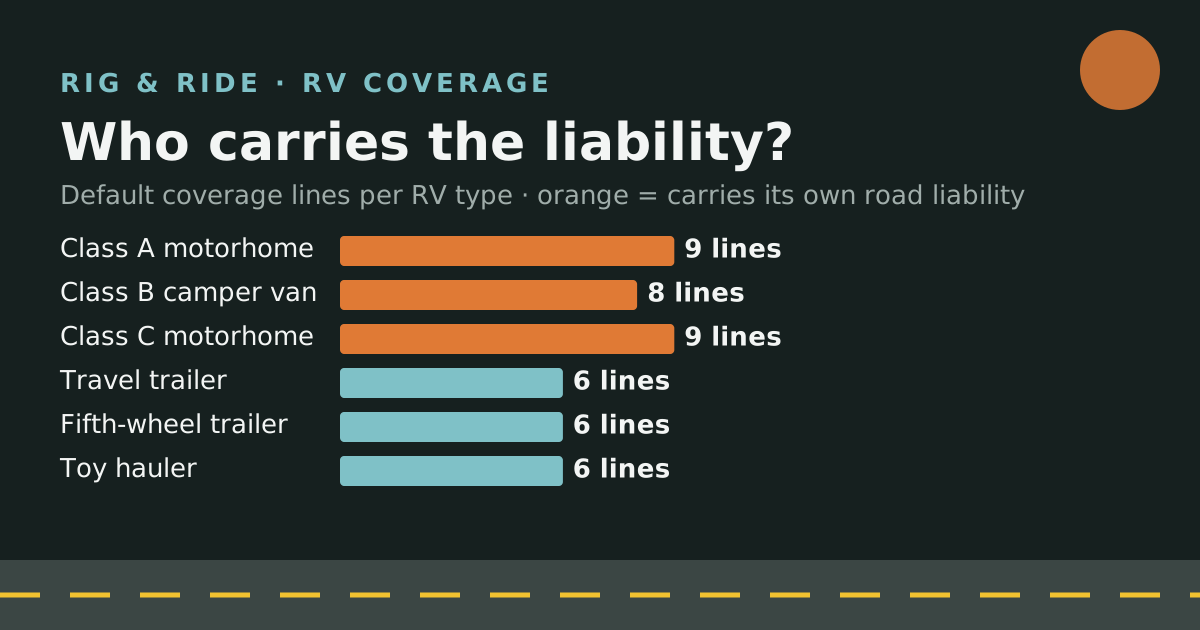
The split that decides most of an RV policy is simple: does the vehicle have its own engine?
Motorhomes are motor vehicles
A Class A, Class B or Class C motorhome is driven on public roads under its own power, so it needs the same on-road liability any car needs, at at least the state's minimum limits, plus UM/UIM where the state requires or offers it. On top of that sit the RV-specific lines: total-loss replacement, personal effects, emergency expense for lodging when the RV breaks down far from home, and roadside that can handle a vehicle that size.
Towables borrow liability
A travel trailer, fifth wheel or toy hauler has no engine. While hitched, liability for what it does on the road usually comes from the tow vehicle's auto policy. So a trailer policy is mostly about the trailer itself — collision, comprehensive, contents — and about the time it spends parked, when vacation liability covers a guest who trips on the steps at the campsite.
Two checks are worth making with the truck's insurer: that the auto policy does extend to a trailer of that weight, and whether it covers damage to the trailer (most do not — that is the trailer policy's job).
Living in it changes everything
Full-time RVers have no house for a homeowners policy to cover, so the liability and contents protection that normally comes with a home has to come from the RV policy. Full-timer coverage adds it. It is on the default list for large Class A motorhomes and fifth wheels, the usual choices for living on the road, and the checklist tool adds it to any RV when "I live in it full time" is ticked.
What to do before buying
List how you use the RV: financed or owned outright, lived in or vacationed in, stored for winter or used year round. Each answer adds or removes a line. Then get quotes on the same list from more than one insurer — RV policies vary more in what they include than car policies do.
Questions
Do I need separate insurance for a travel trailer?
Liability for a towed trailer usually comes from the tow vehicle's auto policy, so a trailer policy is mostly about damage to the trailer and its contents. Lenders require physical damage cover on a financed trailer; confirm the tow vehicle's policy extends to the trailer.
What is full-timer RV insurance?
Coverage for people who live in their RV, adding home-style personal liability and broader contents cover in place of a homeowners or renters policy.